
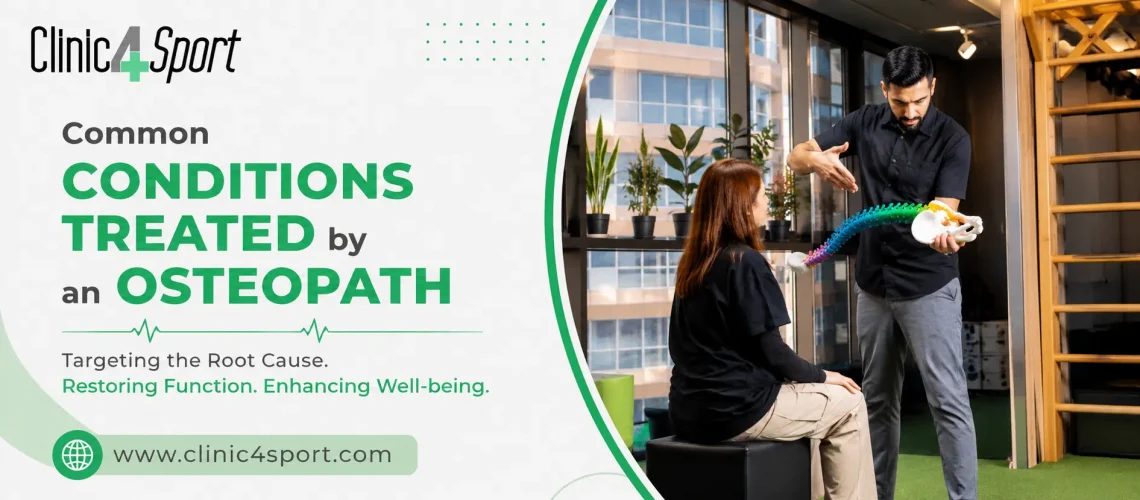
Osteopathy focuses on how the muscles, joints, and other parts of the body work together. An osteopath assesses movement and physical function to understand what may be contributing to discomfort, stiffness, or restricted mobility. Treatment can be useful for people dealing with everyday aches as well as problems related to exercise and sport.
Musculoskeletal Problems Osteopathy Can Address
Osteopathy may be considered for a range of musculoskeletal concerns, including:
- Lower back and neck pain
- Shoulder and upper back discomfort
- Joint stiffness and restricted movement
- Muscle strains and tension
- Sports-related aches and injuries
- Postural and movement-related problems
- Repetitive strain and overuse issues
The right approach varies based on the person’s signs and symptoms, medical history, activity level, and physical examination. An osteopath may also provide advice on movement, physical activity, or any other means of supporting recovery.
When Sports Osteopathy May Be Appropriate
People who regularly run, train, compete, or participate in recreational sports can develop problems through repetitive loading, changes in training, or inadequate recovery. A sports osteopath in London can assess how movement patterns, muscle function, and joint mobility are affecting performance or contributing to discomfort.
This does not imply that every physical issue related to sports should be treated with osteopathy. A proper evaluation can determine whether treatment with osteopathy is suitable or whether a different professional or diagnosis is necessary.
Finding Osteopathy in Chiswick
For people looking for osteopathy in Chiswick, Clinic4Sport provides access to practitioners who work with active individuals and people experiencing musculoskeletal problems. Treatment can be tailored around a person’s symptoms and goals rather than following a standard approach for every condition.
If you’re searching for a sports osteopath in London, consider a practitioner who takes time to understand your activity, injury history, and movement needs. A personalised assessment can help establish an appropriate treatment and recovery plan while identifying when additional clinical support may be needed.