
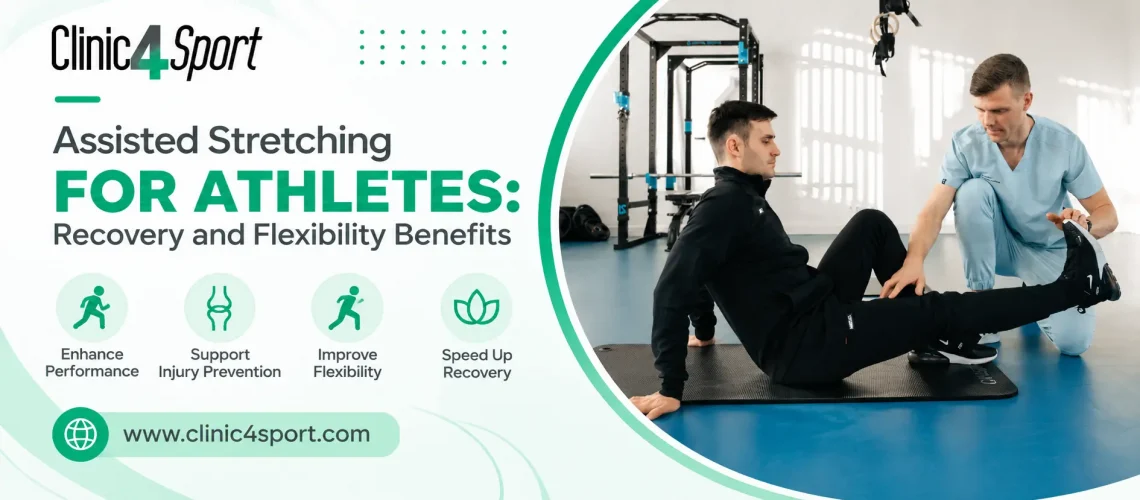
If an athlete overexerts himself while exercising, it’s common for the body to become stiff after training sessions. Assisted stretching can be incorporated into a recovery routine and may help support flexibility and mobility.
Unlike traditional stretching, professional assisted stretching involves a practitioner guiding and supporting the movements. A practitioner can tailor the session to support an athlete’s mobility and recovery goals. Sports stretching can also be incorporated into an athlete’s routine to support movement and recovery.
How Assisted Stretching Can Aid in Recovery?
Assisted stretching is beneficial because it can help achieve greater flexibility after intensive workouts by mobilizing the muscles gently. With the assistance of an instructor, it can help the athlete work through an appropriate range of motion without forcing the stretch.
For example, an athlete may focus on the legs after running, while strength training may place greater demands on other areas of the body. Overall, recovery can be quite beneficial for athletes while they should aim to avoid excessive discomfort during the process.
Can Sports Stretching Improve Flexibility?
Yes, sports stretching can support flexibility when it is performed consistently and appropriately for the activity. Assisted sessions provide an external guide, which can make it easier to maintain positioning and focus on specific areas.
For athletes, flexibility should also serve a purpose. A sprinter may need comfortable hip and hamstring movement, while a football player may benefit from maintaining mobility around the hips, ankles and lower body.
A Practical Approach: The 3R Check
A useful way to approach assisted stretching is to consider:
- Range: Can the joint move comfortably?
- Response: Does the stretch feel controlled rather than painful?
- Recovery: Does the body feel ready for normal activity afterwards?
This simple check helps keep flexibility work relevant instead of treating deeper stretching as the goal.
When Should Athletes Consider Stretching for Recovery?
Stretching for recovery can be included after training or on a separate recovery day, depending on the athlete’s routine and individual needs. It should complement, rather than replace, adequate rest, hydration, nutrition and appropriate training progression.
Assisted stretching can be tailored to an athlete’s movement goals, training demands and individual needs as part of a structured approach to mobility and recovery.
Improve Your Movement
Looking for a more focused approach to flexibility and mobility? Assisted stretching can be tailored to your individual movement and training goals. Assisted stretching for athletes can be adapted to support individual flexibility and recovery goals.